
Alphabet News
2 photos
View on Play Store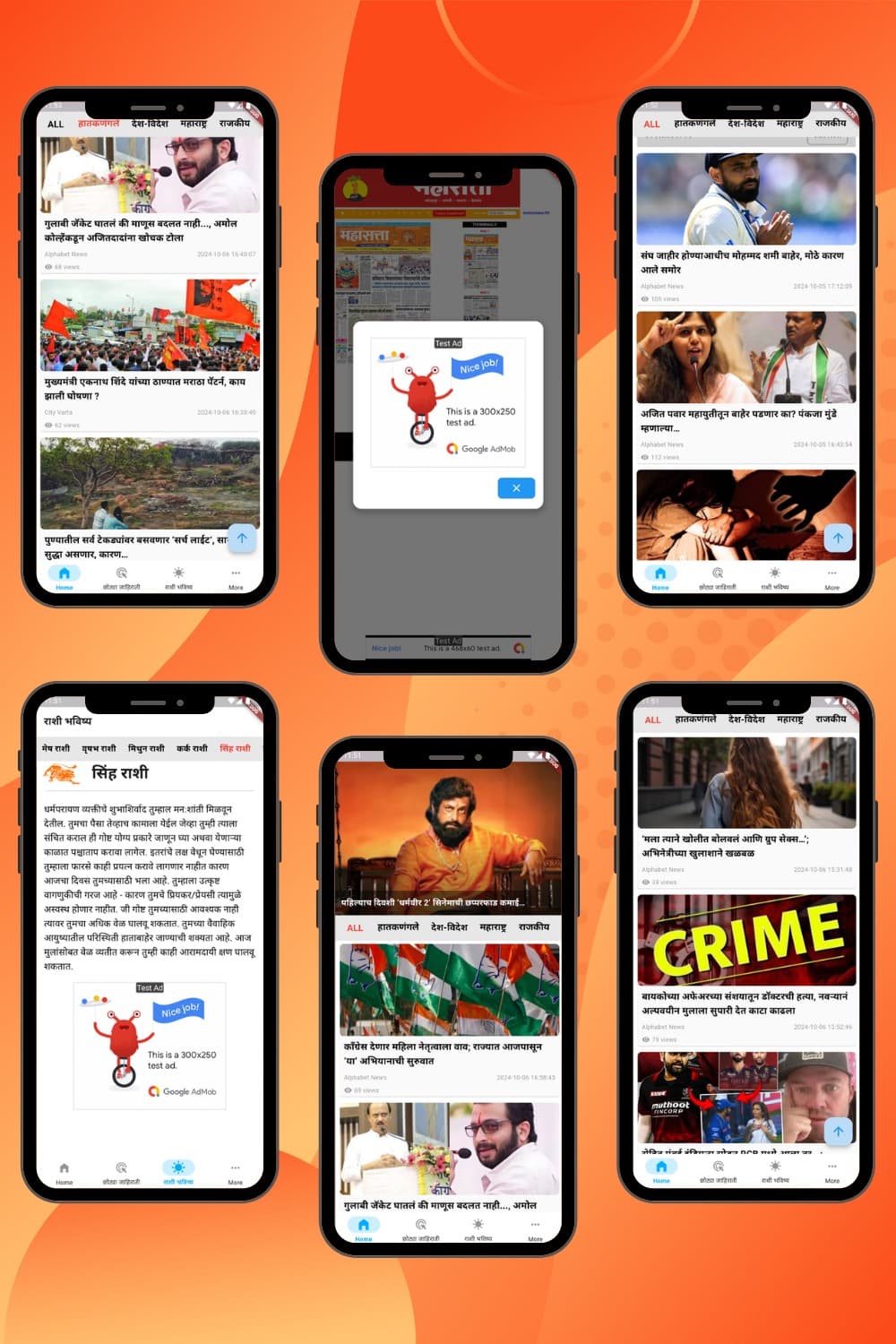
Bringing Local Marathi News to Every Taluka
- Client
- Alphabet News
- Platform
- Android (Flutter)
- Category
- News & Media
- Agency
- Ramscript
Where It Started
Marathi news readers are particular about one thing - they want news from their area, not from some distant city they've never visited. That sounds obvious. But most news apps completely ignore it.
The Alphabet News team came to us with exactly this frustration. They had a running platform, real readers across Maharashtra, and a problem they couldn't fix on their own. People in Kolhapur were landing on Mumbai headlines. Readers in smaller talukas were getting state-level content they didn't care about. The app wasn't speaking their language - not just Marathi, but the language of their district, their town.
They wanted that fixed. And they wanted it to feel native, not patched.
Getting the Context Right
Before jumping into design or development, we sat with the actual use case for a while.
The Alphabet News reader is not someone browsing casually. They open the app with intent - to check what happened nearby, to catch up on local politics, to see if there's anything worth sharing in the family group. WhatsApp is their distribution channel of choice. Social media comes later, if at all.
That told us two things immediately: the feed had to be fast and scannable, and WhatsApp sharing had to be right there on the card - not buried in a share menu after two taps. We also noticed the audience wasn't looking for a premium, feature-heavy experience. They wanted the news. Clean, fast, in Marathi, from their taluka.
What the App Does
Hyperlocal onboarding
When someone opens the app for the first time, they pick their district (up to two) and then their taluka. No account, no email, nothing else. That choice shapes everything they see going forward. Users can always update it from the settings - because people move, visit family, or simply follow two places at once.
The home feed
A full-width image slider up top carries the big stories. Below it, category tabs let readers jump between All, Hatkanangale, Desh-Videsh, Maharashtra, Rajkiya, Crime, and Manoranjan without losing their scroll position. Each card shows the Marathi headline, thumbnail, time since published, view count, and the WhatsApp share button right on the surface. Tapping a story opens the full article in a WebView.
Chhoti Jaahirati
This is the classifieds section, and honestly it's one of the more useful parts of the app for smaller towns. Local businesses, job postings, services - each listing has three contact options: view photos, WhatsApp, or direct call. Very little friction between someone seeing an ad and actually reaching the person behind it.
Rashi Bhavishya
Horoscope content with tabbed navigation across all twelve signs. Nothing complicated. Readers who check their rashi daily wanted a dedicated page, so they got one.
E-Paper
A curated list of Marathi newspapers like Pudhari, Lokmat, Loksatta, Mahasatta, and others. Each one opens the actual digital edition directly. Some readers want the full newspaper alongside breaking news - this covers that without any extra work on their end.
Ads
Google AdMob is integrated across the app. Banners in the feed, interstitials when opening the e-paper section, medium rectangles in the horoscope page. The placement decisions were deliberate - revenue matters, but so does not annoying your readers on every scroll.
How It's Built
Flutter for Android. The app uses a custom sliver layout on the home screen that handles the image slider, promotional content, ad slots, and the main news list inside a single scroll - no janky nested scrolling, no layout jumps.
The flow at launch: check if a taluka is saved → if not, send to district/taluka selector → if yes, straight to the home navigator. Simple state management, clean routing.
How It Landed
The hyperlocal filtering actually changed how people used the app. Readers stopped bouncing off irrelevant content and started staying longer. The classified ads section gave local advertisers a direct line to their audience without needing a separate platform. And the codebase we handed over is structured well enough that adding new districts, sections, or features down the line isn't a rebuild - it's just an extension. The app does what it said it would do. For a region where most products are built with big cities in mind, that alone makes it stand out.
Ramscript – we build products that fit where people actually live.